

Theoretically, this makes sense because the gains and losses from assets sold before and after the composite life will average themselves out. Depreciation ceases when either the salvage value or the end of the asset’s useful life is reached. In determining the net income (profits) from an activity, the receipts from the activity must be reduced by appropriate costs. Depreciation is any depreciation simple definition method of allocating such net cost to those periods in which the organization is expected to benefit from the use of the asset. Depreciation is the process of deducting the cost of an asset over its useful life.3 Assets are sorted into different classes and each has its own useful life. Depreciation is technically a method of allocation, not valuation,4 even though it determines the value placed on the asset in the balance sheet.
Property
By recognizing depreciation as an expense, companies can match the cost of an asset with the revenue it generates over time, adhering to the matching principle of accounting. Most income tax systems allow a tax deduction for recovery of the cost of assets used in a business or for the production of income. Where the assets are consumed currently, the cost may be deducted currently as an expense or treated as part of cost of goods sold. The cost of assets not currently consumed generally must be deferred and recovered over time, such as through depreciation. Some systems permit the full deduction of the cost, at least in part, in the year the assets are acquired. Other systems allow depreciation expense over some life using some depreciation method or percentage.
Understand your financial statements
The straight-line method is charged the depreciation expenses equally throughout the life of assets. The expenses charged during the period are based on the entity’s rate to the specific fixed assets. It is the accumulation of the depreciation expense charged to the property, plant, and equipment since the beginning.
What Are Non-Operating Expenses? Definition & Examples
If your business makes money from a rental property, you can even depreciate the rental property. While doing so you have to keep in mind that you can depreciate the value of an apartment or a building and not the value of the land on which the building stands. If you make upgrades in the property before renting it out you normal balance can add them to the depreciation as well on a condition that they are useful and can last for more than a year. When it comes to depreciating an asset you need to consider a few things; one of those is the useful life of the asset. The number of years over which you can depreciate something depends upon its useful life period.
- But unlike Straight-line, the depreciable cost of the asset is lowered each year by subtracting the previous year’s depreciation.
- For financial statements to be relevant for their users, the financial statements must be distributed soon after the accounting period ends.
- Make sure you have a method in place for tracking your use of equipment, and expect to write off a different amount every year.
- Calculate the depreciation expenses for 2012, 2013, and 2014 using a declining balance method.
- A significant change in the estimated salvage value or estimated useful life will be reported in the current and remaining accounting years of the asset’s useful life.
In this Keynote Support tutorial, I define and explain depreciation in easy to understand terms, and https://lolita.busyantmarketing4.a2hosted.com/real-estate-accounting-services-bookkeeping-cfo/ provide useful examples including the journal entries involved. For example, when Microsoft invests $80 billion in AI infrastructure, it will deduct portions of those purchases each year, lowering its corporate tax bill. Units of production depreciation is based on how many items a piece of equipment can produce. Christine Aebischer is an former assistant assigning editor on the small-business team at NerdWallet who has covered business and personal finance for nearly a decade. Previously, she was an editor at Fundera, where she developed service-driven content on topics such as business lending, software and insurance.
What happens if you don’t depreciate?
Whether it’s machinery for a manufacturing company, vehicles for a delivery service, or buildings for a corporation, assets tend not to last forever. Annuity methodThe annuity method does not consider the useful life of an asset in terms of years but considers it in terms of production capacity. To put it in simple terms, you can say that the annuity method used in the calculation of depreciation is not time based. The value that you get by this calculation is the depreciation value of that machine per unit. This value is then multiplied by the number of units manufactured in a financial year to get the total depreciation value for that year. Depreciation is an important part of accounting records, which helps companies maintain their income statement and balance sheet properly with the right profits recorded.
Depreciation Formula:
It is feasible to use this method when the noncurrent asset does not involve many renewals or repairs. Depreciation is calculated by deducting the scrap or salvage value from the original cost of the noncurrent asset and then dividing the balance with the estimated useful life of the noncurrent asset. The depreciation calculated must be charged yearly from the cost of the asset.

Depreciation and Taxation
I recommend consulting with your CPA or financial advisor regarding depreciation of newly-purchased assets. Instead of recording an asset’s entire expense when it’s first bought, depreciation distributes the expense over multiple years. Depreciation quantifies the declining value of a business asset, based on its useful life, and balances out the revenue it’s helped to produce.
- This method can be used to depreciate assets where variation in usage is an important factor, such as cars based on miles driven or photocopiers on copies made.
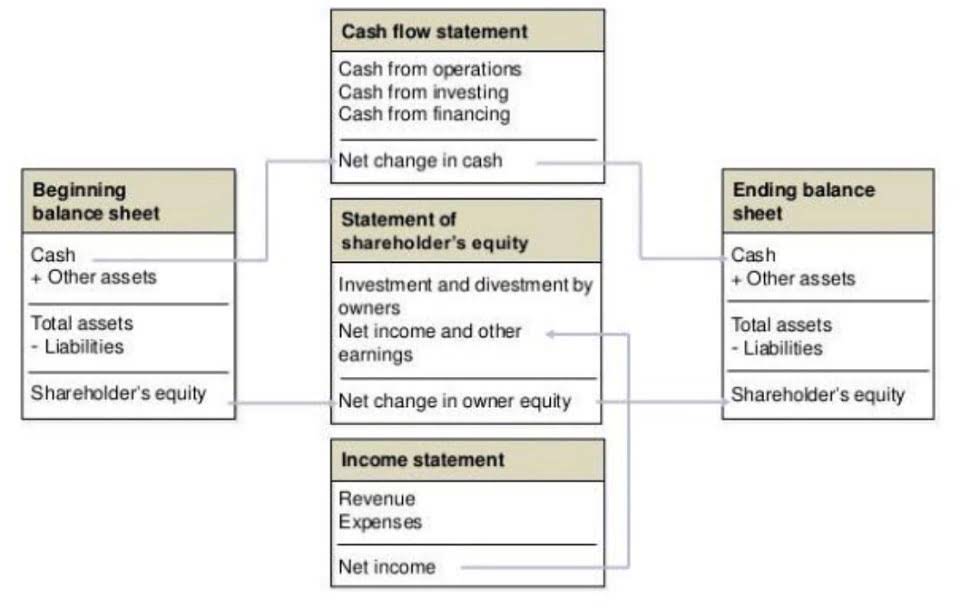
- The amount that a company spent on capital expenditures during the accounting period is reported under investing activities on the company’s statement of cash flows.
- The expenses that charge during the period (monthly or yearly) are recorded in the company’s income statement.
- The most common way of calculating depreciating expense is the straight-line method.
- It would be inaccurate to assume a computer would incur the same depreciation expense over its entire useful life.
- For example, if an asset has a useful life of 5 years, the sum of the digits 1 through 5 is equal to 15 (1 + 2 + 3 + 4 + 5).
Accordingly, the firm charges $10,000 to depreciation expense in each of those five years. This charging to expense in a consistent, even amount over time is called the straight-line method. Yet another variation is to depreciate based on the actual usage of an asset, which is addressed by the units of production method. Depreciation is a crucial accounting practice that spreads the cost of expensive assets, like equipment, across their useful life. This helps businesses avoid the appearance of financial loss from large upfront expenses and matches the cost of assets with the revenue they generate over time.